
On the traces of the medieval past
In the Middle Ages, Srebrenica was an economic and strategic center of the region, and its exceptional economic power and military significance are best confirmed by the remains of five medieval towns and fortifications distributed across this area. As one of the most important mining sites in Europe at the time, Srebrenica developed a strong urban structure and a network of defensive fortifications whose key task was to protect the rich silver mines, trade routes, and the local population from external incursions.
Meet five historical guardians of the Srebrenica region:
Located on a mountain slope directly above the modern urban center and the Srebrenica bazaar, this town represents one of the most important strongholds of the region. Dating back to the early Middle Ages (often linked to the 12th century), it consisted of an upper fort, which served for defense and control of the mining settlement, while the lower, artillery section was added later in the Ottoman period. Due to its exceptional historical significance, the complex has been designated as a national monument of Bosnia and Herzegovina.
- Location, strategic importance and purpose of the fortress
Fortress management and military garrison
-Connection to life in the suburbs (Civitas / Trg)
The Old Town of Srebrenik was connected to an extremely developed urban life of the suburb (citizenship):
-Fall under Ottoman rule and transformation
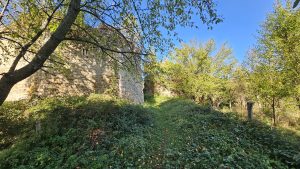
This medieval town was built on an inaccessible, steep rock that rises high above the Drina River canyon. It had a strictly defensive character, providing a perfect overview of the river's navigable flow and the roads leading toward the interior of Bosnia and Serbia. Today, it is located within the borders of the „Drina“ National Park, and thanks to well-maintained and mapped hiking trails, it is a favorite spot for tourists seeking a spectacular panoramic view of Lake Perućac and the surrounding canyon.
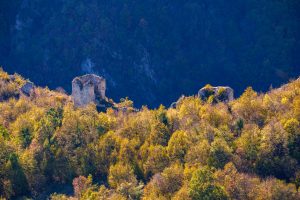
It is located just 7 kilometers downstream from Klotjevac, also within the „Drina“ National Park area. The proximity of these two fortifications clearly shows how strategically secured the Drina canyon was in order to prevent unwanted incursions and protect wealthy trading caravans transporting silver. Today, Đurđevac is in a ruined state, hidden in dense vegetation, but its remains still bear witness to a turbulent past and the continuity of life in this area, which is also confirmed by the surrounding stećak necropolises.
Kličevac is yet another in a series of fortifications that served as military and defensive outposts for the protection of the Srebrenica mining basin. Although only modest fragments of walls and towers, which are difficult for visitors to access, remain of it today, Kličevac represents an indispensable link in the historical context of the defensive ring around the medieval town.
Located at a strategic point in the municipality of Srebrenica, the town of Šubin completes the group of five medieval fortifications in this region. Like Kličevac and Đurđevac, the ravages of time and decades of inaccessibility have caused its remains to be overgrown with forest vegetation. Nevertheless, for researchers and lovers of wild history, Šubin represents an authentic site that conceals the secrets of the organization of life and defense from the period of Bosnian bans and kings.